

Joplin, Missouri, sits in the southwestern corner of the state within the Ozarks region, where rolling woodland, limestone formations, and waterways surround a city shaped by mining, transportation, and Route 66. Its downtown combines historic buildings, murals, independent businesses, restaurants, and cultural venues, while the Murphysburg Historic District preserves some of the community’s older residential architecture. Joplin became an important center for lead and zinc mining, and its later connection with Route 66 added another layer to its identity. Today, the city serves as a regional center for southwest Missouri and a gateway to the surrounding Ozark landscape.
Joplin’s history is closely connected to the mining industry that transformed the area and attracted workers and families from many backgrounds. The city is named for Reverend Harris Joplin, an early settler and Methodist minister, rather than the better-known musician Scott Joplin. Route 66 later became an important part of the city’s cultural identity, passing directly through downtown. Joplin also has a significant connection to African American history through Langston Hughes, who was born in the community. Local museums, historic neighborhoods, murals, and preserved buildings continue to interpret these different aspects of Joplin’s past.
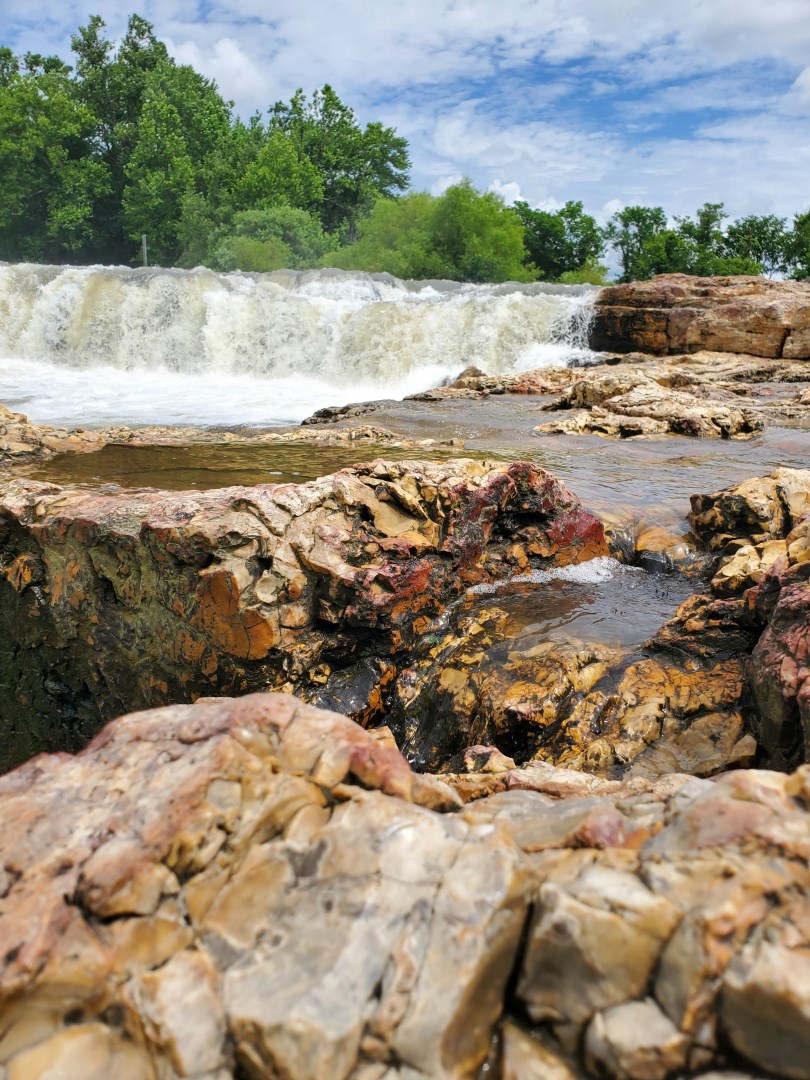
Joplin offers several attractions that highlight both its urban history and Ozark setting. Grand Falls, on Shoal Creek, is a broad natural waterfall surrounded by rocky terrain and woodland. The Wildcat Glades Conservation and Audubon Center protects a rare chert glade ecosystem, while nearby George Washington Carver National Monument in Diamond preserves the birthplace and childhood landscape of the renowned scientist and educator. In the city, visitors can explore Route 66 landmarks, the Joplin History and Mineral Museum, and murals scattered throughout downtown. Parks and trails provide additional opportunities to experience the region’s forests, streams, and distinctive geology.
Joplin’s food scene includes barbecue, burgers, Southern-influenced cooking, cafés, bakeries, and restaurants serving international cuisines, reflecting its role as a regional commercial center. The city also retains visible connections to its mining past, with mineral specimens and mining artifacts featured in local collections. Route 66 remains one of the most distinctive details of Joplin’s identity, and the highway’s path through the city can still be explored alongside historic signs, murals, and roadside businesses. Another notable connection is George Washington Carver National Monument, whose restored prairie, historic farm landscape, and interpretive exhibits are located only a short drive from Joplin.
Other Popular Destinations in Missouri